New BNSF bridge will accommodate trains for next century and beyond
By SUSAN GREEN
Staff Writer
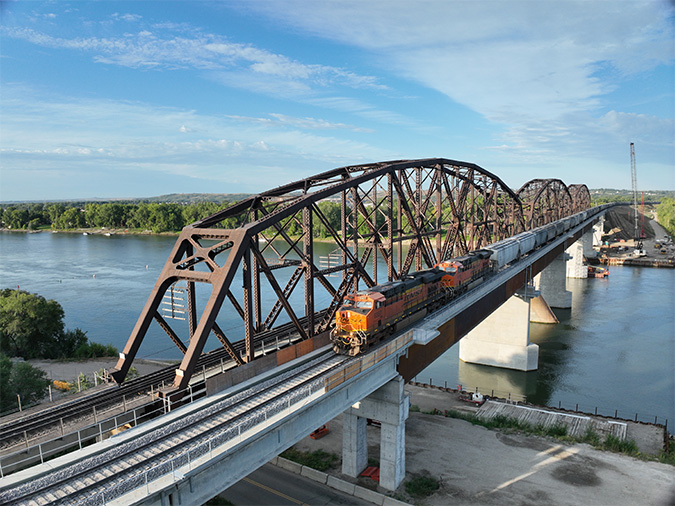
Three years after construction began on the new single-track railroad bridge at Bismarck-Mandan, North Dakota, the first trains crossed the Missouri River on September 16, 2026. A westbound train inaugurated the 1,554-foot-long bridge at 6:51 a.m. and an eastbound crossed within hours.
Timing of this milestone couldn’t have been better, with harvest underway and agricultural producers counting on us to move their product to market during the season and beyond.
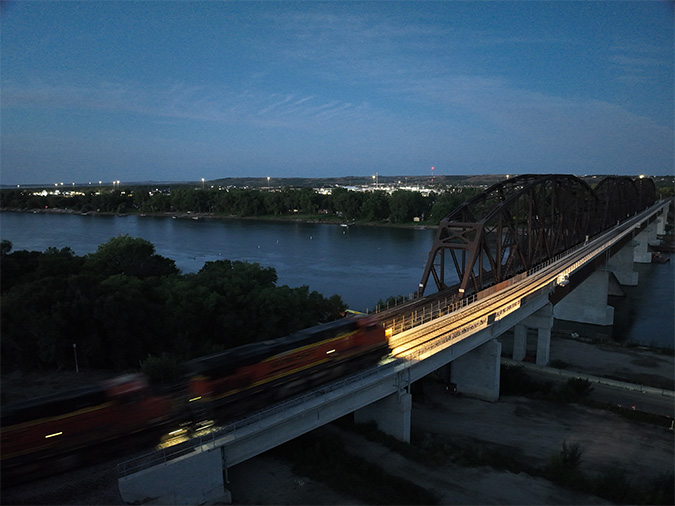
“Putting our new BNSF bridge in service is incredibly important for our ability to continue serving customers in North Dakota and across our network,” said Amy McBeth, general director of public affairs. “It’s a massive private infrastructure project that facilitates interstate commerce and is the biggest project we’ll have in the state for several years.”
The new bridge replaced an adjacent 140-year-old truss bridge that was approaching the end of its life. Built by predecessor Northern Pacific Railway, the old bridge design also limited our ability to transport certain loads given its vertical and horizontal clearances.
Prior to the cutover, it took a 20-hour work window for the project team of about 50 to shift the track on the west and east sides to align with the new bridge.
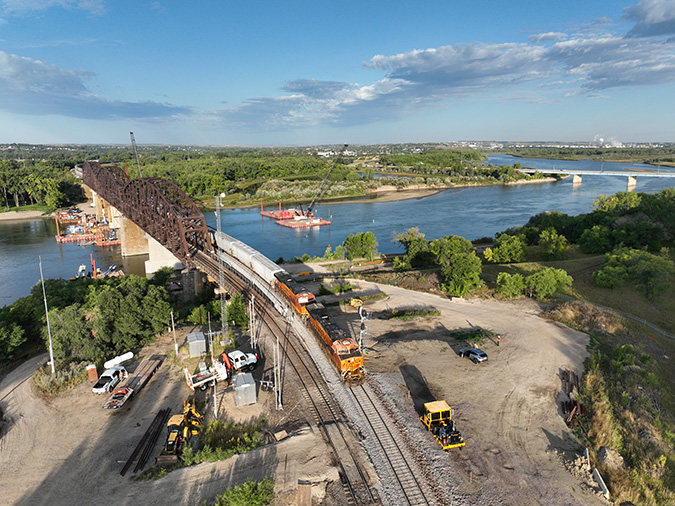
“While BNSF has had bridge replacement projects of this scale in the past, this is one of the larger and more challenging projects to develop and construct,” said Mike Herzog, director, bridge construction. “It took nearly eight years to design and permit, and from mobilization to demobilization it’ll take another four years.”
Another challenge was weather that shortened the construction season and was dictated by ice flow. All temporary structures used to construct in-water piers had to be removed before the ice flow started.
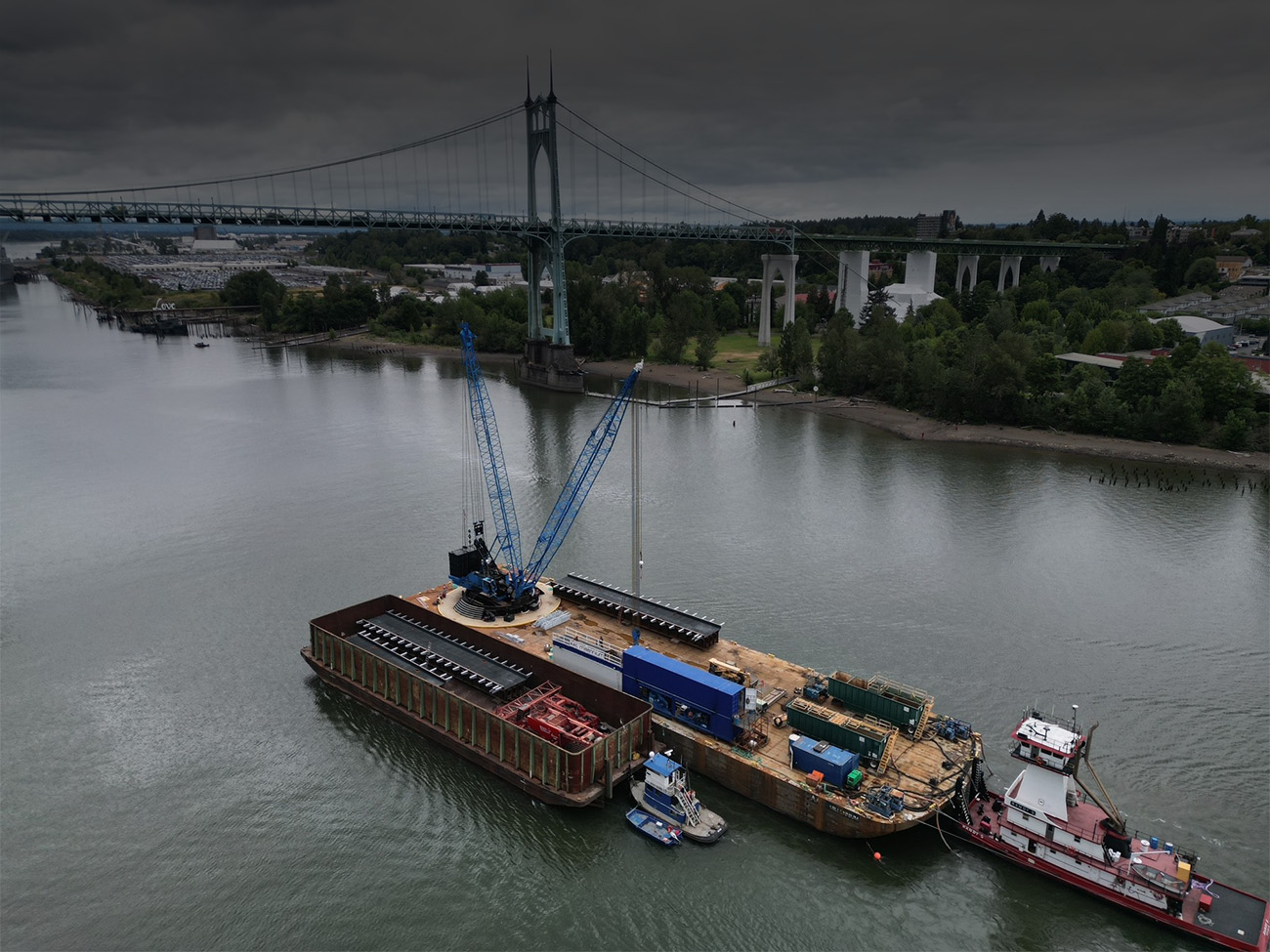
Now, work is underway to remove the old bridge. Falsework (temporary structures) in the river will facilitate the removal, as the trusses are cut into pieces and taken from the river to the west side of the project site. The center truss will be the first removed.
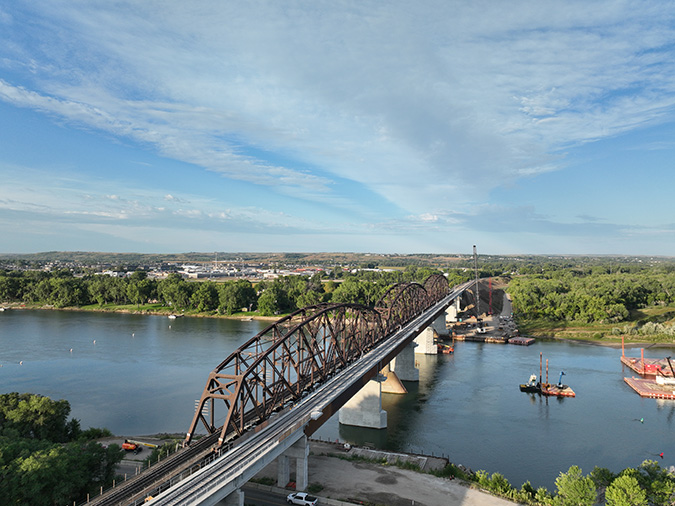
That work is expected to continue throughout the fall and winter as weather permits.
“By mid-next year, we expect the removal to be complete,” Herzog said. He noted that site restoration includes removing all temporary dock walls along the river that provided river access. Ultimately, the area will be restored to a condition like what was there before the project.
“We recognize a project of this size can be disruptive to the community so an important component of our work has been to communicate regularly on what is planned and what will happen next,” McBeth said. “The whole team has done a good job minimizing the disruption as much as possible while working safely and efficiently as possible.”
Herzog gave a shout-out to all the crews that had a hand in the construction, some of it round the clock. “Much credit and praise to the BNSF personnel that spent countless hours on site working with our contractor, Ames Construction, and consultant, TKDA, building the new bridge,” he said.
As the old bridge comes down, the new bridge will stand as both a symbol of modern rail infrastructure and the next chapter in a transportation corridor that has connected North Dakota communities for more than 140 years.